Dustin Schwarz is a Senior Data and AI Strategist at DAIN Studios Berlin, where he drives data and AI transformation initiatives by combining strategic elements with our user-centric data thinking method to tackle complex challenges. In this article, he shares his reflections and insights on how artificial intelligence can be utilized by organizations of any size to achieve positive societal or environmental impact.
In my role as a consultant, I frequently observe across different projects and particularly during trainings that AI is perceived with a blend of fascination and apprehension. While there are valid concerns about misuse, such as deepfakes, cyber hacking, and scams, these fears can often overshadow the profound potential of AI to drive positive change. And this is exactly what I want to focus on in this article.
What excites me most is witnessing how the democratization of AI and data capabilities enables organizations of all sizes – not just large corporations – to leverage AI for good. From healthcare breakthroughs to empowering nonprofits, AI is transforming lives and solving complex problems. During my years at DAIN Studios, I was involved in several projects specifically designed to use data analytics and AI to address different environmental and societal challenges. I had the opportunity to meet inspiring individuals who were deeply driven by the desire to make a positive impact. We’ll dive deeper into these experiences later in the article.
While I have just encountered a few examples, it is important to recognize that there is a vast array of initiatives happening on a larger scale. Several NGOs are leading the charge in applying AI for social impact. For instance, Save the Children leverages natural language processing (NLP) models to analyze online safety risks for children, ensuring a safer online experience for young users. Conservation International utilizes AI-powered tools for biodiversity monitoring and ecosystem preservation, aiding in the protection of endangered species and maintaining ecological balance. Additionally, the World Food Programme employs AI to optimize food distribution logistics and predict food insecurity, ensuring that aid reaches the most vulnerable populations efficiently and effectively. These initiatives show how data and AI help nonprofits make a bigger impact, proving that new technology can bring real social and environmental benefits across different areas.
Key areas where AI is making a positive impact
AI’s versatility allows it to address pressing societal and ecological challenges across various fields. Below are some key areas and examples where AI is already making a difference:
1. Healthcare
AI is revolutionizing healthcare by enhancing various aspects of medical practice, from diagnostics to personalized treatment plans and overall patient care. With its ability to process vast amounts of data and uncover patterns, AI empowers healthcare professionals to make more accurate diagnoses, develop targeted therapies, and streamline clinical workflows. Here are some key AI applications in the healthcare sector:
- Early disease detection: AI systems can identify conditions like sepsis or breast cancer earlier than traditional methods, enabling timely interventions.
- Drug discovery: Machine learning accelerates the development of new medicines by analyzing molecular structures and optimizing clinical trials.
- Telemedicine: NLP-powered chatbots provide medical advice in underserved regions, bridging gaps in healthcare access.
2. Environment and sustainability
AI is becoming an indispensable tool in the fight against environmental challenges. By harnessing its analytical and predictive capabilities, AI aids in the development and implementation of effective strategies to combat climate change, promote wildlife conservation, and optimize energy consumption. Below are some key applications of AI in the realm of environmental sustainability:
- Climate change mitigation: For instance, Greenpeace uses AI models to analyze satellite data and monitor deforestation activities, assisting in the execution of more effective environmental policies.
- Wildlife conservation: Organizations like WWF use AI-driven monitoring systems to combat poaching and preserve biodiversity.
- Energy optimization: AI contributes significantly to renewable energy initiatives like Renewable Africa 365 by identifying optimal locations for infrastructure development and improving energy efficiency. 6
3. Education and society
AI is driving profound societal changes by making various services more accessible, personalized, and efficient. From enhancing donor engagement to improving humanitarian aid and expanding educational access, AI is transforming the way organizations address critical global challenges. Below are some key applications highlighting AI’s impact on society:
- Donor Engagement: Organizations like Zero emissions World (ZWE) use machine learning to personalize donor outreach, boosting fundraising success rates.
- Humanitarian aid: Mercy Corps employs AI-driven tools for resource allocation in refugee camps, improving efficiency and outcomes.
- Education access: The International Rescue Committee uses AI-powered chatbots to deliver educational content to children in crisis zones.
4. Disaster management
AI enhances disaster preparedness and response by leveraging advanced technologies to predict, allocate resources, and assess impacted areas. Key applications include:
- Early warning systems: Machine learning models predict natural disasters like floods or cyclones, allowing communities to prepare in advance.
- Resource allocation: Algorithms optimize the distribution of emergency supplies during crises, ensuring efficient use of limited resources like the United Nations High Commissioner for Refugees (UNHCR).
- Recovery plan development: AI helps design equitable rebuilding strategies based on the severity of damage across regions.
DAIN Studios’ commitment to “AI for Good”
We want to do our part by supporting organizations that use AI for positive change. As I mentioned earlier, this cause is dear to my heart. In the following, I want to share four examples of projects that we at DAIN Studios supported, and fortunately, I had the opportunity to be involved in three of them.
Spotting rare heart diseases
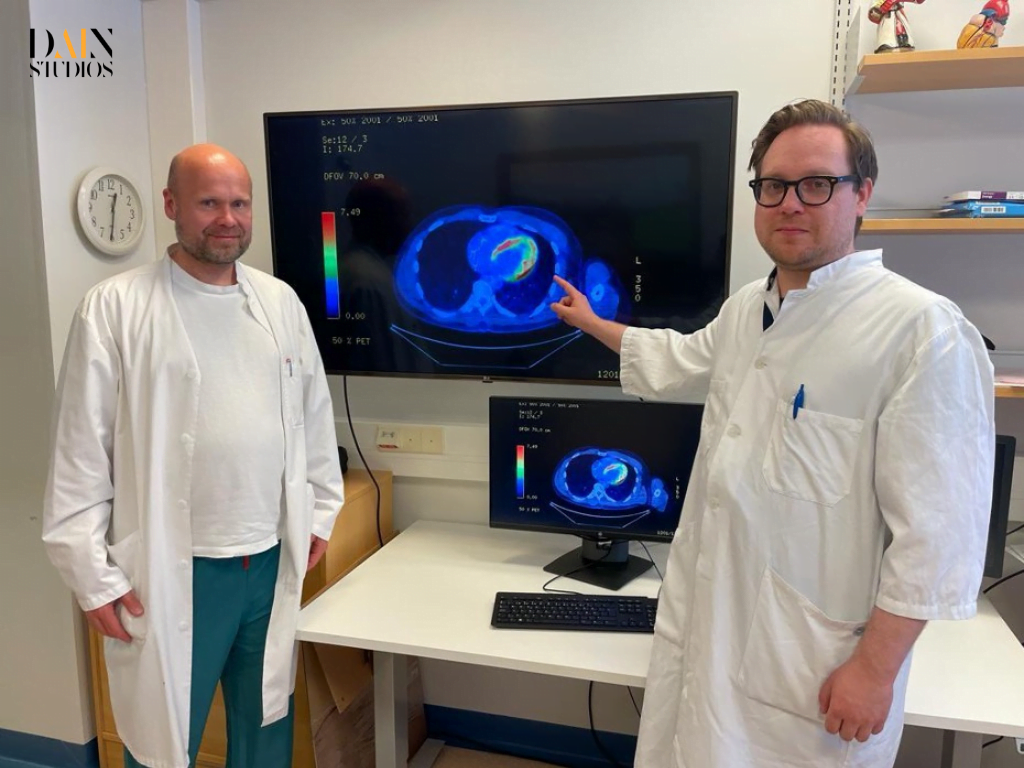
In partnership with Helsinki University Hospital (HUS), we at DAIN Studios developed an explainable AI model that detects cardiac sarcoidosis, a rare heart condition, with over 93% accuracy using 3D PET-CT scans. We’re proud of this project’s focus on transparency, as the model generates heatmaps that highlight areas of concern within scans, fostering trust among clinicians and significantly reducing diagnostic timeframes. This innovation not only enhances healthcare outcomes but also democratizes access to high-quality diagnostics globally, empowering clinicians in underserved regions with advanced tools.
Supporting communities with crime data visualization
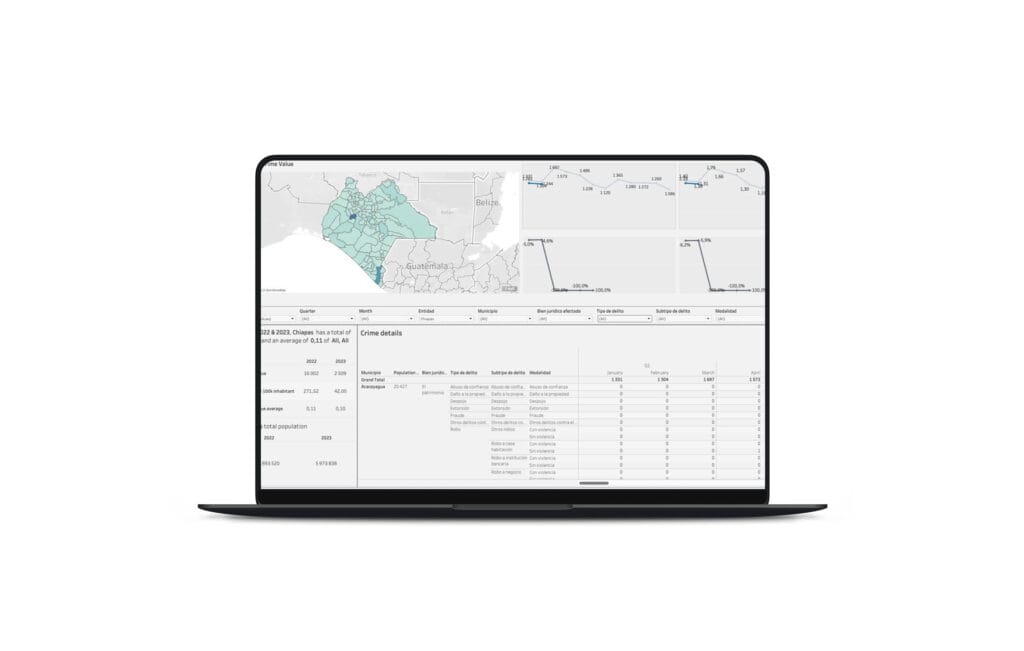
The first project of this kind that I had the opportunity to work on was a collaboration with Ligalab. We developed the first version of an informative dashboard for the population of Chiapas, Mexico. We started by defining focus personas to understand their goals and behaviors, which enabled us to design an interactive Tableau dashboard. The dashboard includes visual displays and clear explanations designed for users with different education levels. This effort aims to improve public awareness about regional crime and make important information more accessible, helping the Chiapas community stay informed and involved.
Helping NGOs to shape their AI use cases for good
A major aspect of my role involves leading opportunity workshops and supporting upskilling initiatives to help individuals identify meaningful use cases. Collaborating with my colleagues, we applied this expertise in Tech to the Rescue’s AI for Changemakers program by conducting workshops using our established data thinking method. Data thinking is a structured approach that guides organizations through identifying actionable ideas for applying AI in their missions. These workshops empowered NGOs and helped them to conceptualize impactful use cases tailored to their unique challenges.
Improving donor engagement
Much like the Tech To The Rescue initiative, I facilitated an AI opportunity workshop with Wirhelfen.shop – a nonprofit e-commerce platform supporting social projects. They needed innovative solutions to enhance fundraising efficiency while keeping costs low. During several exercises, we explored generative AI applications such as automated content creation and donor segmentation. Together with their team, we identified 12 actionable use cases, three of which were prioritized as feasible projects with significant impact potential.

Conclusion
From my perspective, the democratization of data and AI is transforming sectors like education, healthcare, and the environment. Organizations like NGOs are able to harness these technologies for good, offering innovative solutions to improve lives globally.
In this article I showcase a few projects that highlight the power of collaboration between NGOs and tech companies like DAIN Studios, from opportunity workshops to scientific research in heart disease detection. These examples show how AI and data-driven solutions can help organizations fulfill their missions.
I’m thankful I could contribute to three of these projects, working alongside creative individuals who are passionate about making a positive impact. These experiences have deepened my understanding of AI’s potential and the importance of collaboration. I encourage others to join in, using their skills and enthusiasm to make a difference.