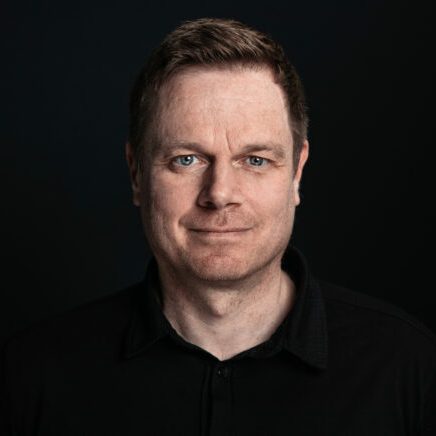
The writer, Dirk Hofmann, is the Co-Founder and CEO of DAIN Studios Germany. Dirk is a veteran in the consumer electronics industry having acted in various product, marketing, and strategy roles at Siemens, BenQ, Nokia, and Deutsche Telekom. At DAIN Studios, he focuses on helping organisations move beyond AI ambition — building the skills, structures, and mindset needed to put AI to work.
We often discuss how AI transforms business—automation, productivity, value creation. But the more profound shift may be happening somewhere else: in how we learn. AI is developing so quickly that traditional learning models—a training course here, a workshop there—simply can’t keep up. Learning can no longer be episodic. It must become a habit. And here lies the paradox: the same technology that forces this change also enables it.
Learning as a Habit, Not a Course
For decades, corporate training has followed the same logic: schedule, deliver, certify, repeat. That rhythm made sense when technologies evolved in predictable cycles. But AI doesn’t evolve in cycles—it evolves continuously. That means learning can’t stop and start; it has to flow.
When I speak with clients, I often describe it this way: we can no longer separate learning from doing. The best way to understand AI is to apply it—to test, to fail, to iterate. Every project becomes a classroom. Every use case becomes a lesson. The encouraging part is that AI also gives us the tools to do this. What used to require heavy infrastructure or academic access is now open to everyone.
AI as Both Driver and Enabler
AI is the reason we must learn differently—but also the reason we can. At the Harvard Data Science Initiative, where I currently teach together with my business partner Ulla and colleagues from Harvard, Berkeley, and UBC, we see this change in real time. We are teaching on the Next Generation Learning (NGL) platform, which provides the digital environment for the program. The NGL platform includes Paski, an AI tutor developed by NGL that interacts with every participant individually.
In earlier years, a student might meet a professor once a semester. Now, through Paski, learners have a personal AI tutor guiding them every day. The tutor can answer follow-up questions, suggest material, and adapt to each learner’s motivation and background. The experience is not episodic anymore, but ongoing and personalised.
This is what excites me most: technology has made learning accessible again. It’s no longer a privilege reserved for a few with access to academic resources. Anyone can now have a tutor—and keep learning, continuously, at their own pace.
Academia and Business: A New Balance
This accessibility also changes the role of academia. In the past, universities were the gatekeepers of knowledge. If you wanted to work with advanced data or AI methods, you needed their infrastructure. That’s no longer true. Businesses now have the tools, data, and computing power to learn and experiment directly.
Academia still plays a crucial role, but a different one. It provides the foundation and reflection: the ethical, societal, and methodological context. Business takes the role of application and acceleration.
In that sense, we are witnessing a healthy rebalancing: universities as the source of foundational principles, and companies as the laboratories of practice.
At DAIN Studios, this is exactly the intersection we operate in — strategy, capability building, and upskilling. When we help a client develop an AI roadmap, we don’t stop at the plan. We help them execute it and learn to execute it, ensuring the knowledge stays within their organisation. Often, we also take part in the hands-on work ourselves. The lines between consulting and learning have blurred.
Learning by Doing in Practice
Our collaboration with Linde, the global industrial gas company, is a good example of this shift.
Linde wanted to raise GenAI literacy across a global workforce of 65,000 employees. Together, we designed a two-month program that reached thousands of employees across seven time zones. Instead of passively consuming content, participants co-created 70+ use cases, applying generative AI directly to their daily work.
One of them, AuditGPT, now automates internal audit reporting. It saves thousands of hours each year and delivers several million euros in value.
What began as a learning initiative turned into an innovation pipeline. That is what applied learning looks like in practice: learning as doing, and doing as learning.
Continuous Transformation: The Real Learning Shift
Too many organisations still treat AI upskilling as a project: a set of workshops or a pilot program. But AI doesn’t fit into that format. It evolves faster than any course can keep up. The companies moving ahead are those that treat AI adoption as an ongoing learning and transformation journey. They integrate learning directly into their processes, measure business outcomes, and expect their systems—and their people—to improve over time.
“The core barrier to scaling is not infrastructure, regulation, or talent. It is learning.” MIT, 2025
That observation matches what we see every day. Technology is rarely the bottleneck. The real challenge is building the organisational muscle to learn continuously — to experiment, adapt, and reapply insights. Learning has become the new transformation capability.
At DAIN Studios, we’ve learned that strategy, delivery, and upskilling are no longer separate steps: they form a single, iterative loop. You set the direction, build capabilities, apply them in real projects—and learn again. This cycle is what defines resilient, AI-ready organisations.
AI is forcing us to rethink how we learn, and that’s a good thing. It’s pushing us away from episodic, one-off courses toward living systems of knowledge: applied, personalised, and continuous. The question for leaders is no longer how to train their people once, but how to help them keep learning every day through real work. The future won’t be led by the best technology, but by the best learners.